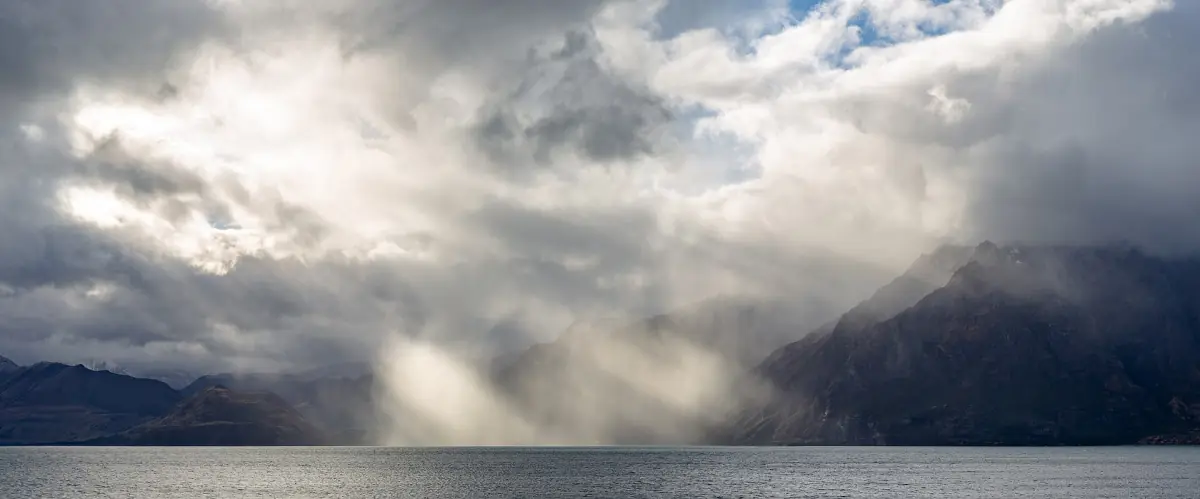
Wānaka weather is not Blue Pools weather
The Blue Pools sit in the Makarora valley, on the Otago side of the Haast Pass. Wānaka is about an hour and ten minutes away by car, and its rainfall is a fraction of what the valley gets. A Wānaka forecast tells you about Wānaka. It is a poor guide to rain at the pools, at the Haast Pass or at the waterfalls on the way to Haast.
The corridor along State Highway 6 (SH6) gets much wetter toward the Haast Pass. The figures below are long-term averages, not a forecast. Before you leave, check a forecast for Makarora or the Haast Pass for your day, and the NZTA road conditions for SH6.
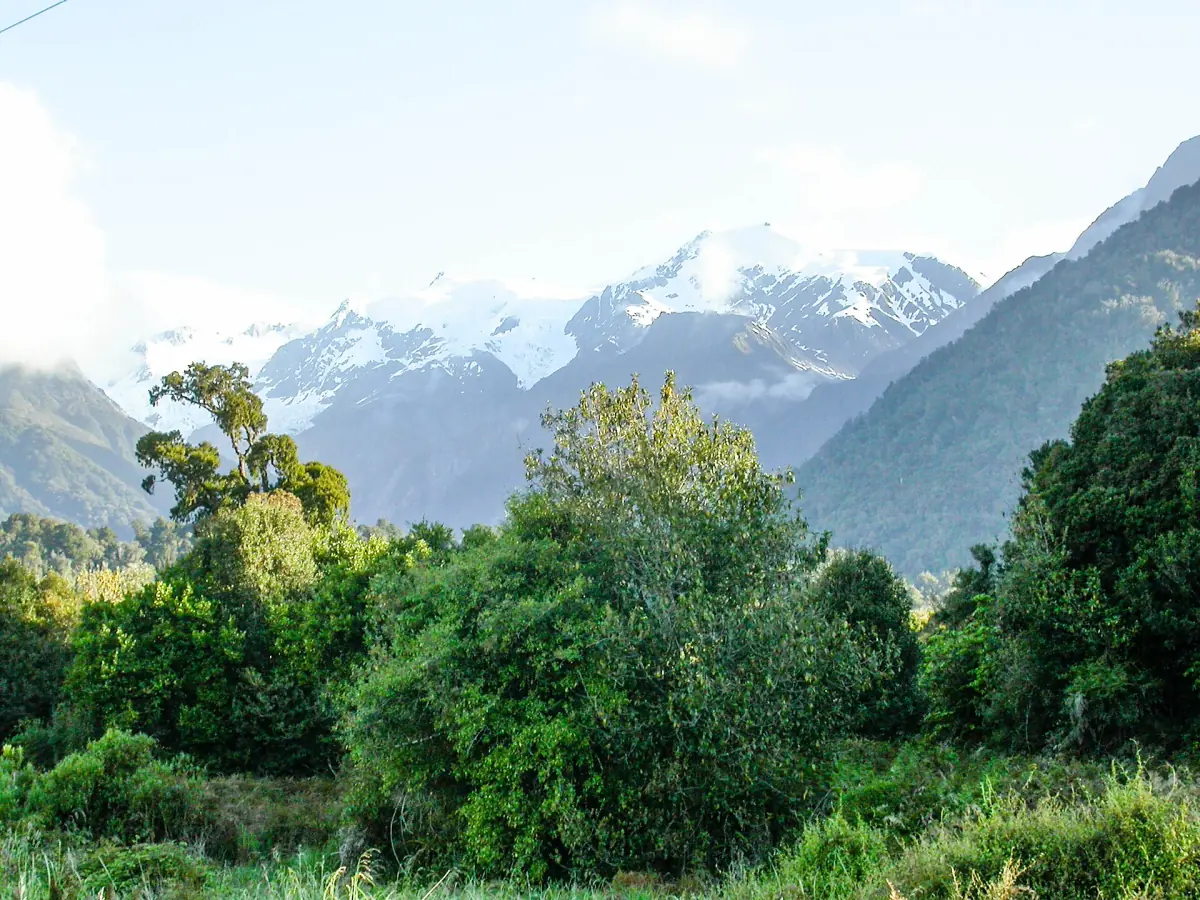
Rainfall by month: Wānaka and Makarora
Climate averages for 1981 to 2010 from NIWA, published in 2015. They show the pattern, not the weather of 2026.
| Month | Wānaka Airport (mm) | Makarora (mm) |
|---|---|---|
| January | 55 | 197 |
| February | 35 | 134 |
| March | 44 | 194 |
| April | 47 | 175 |
| May | 58 | 202 |
| June | 60 | 228 |
| July | 38 | 185 |
| August | 52 | 217 |
| September | 57 | 232 |
| October | 48 | 241 |
| November | 35 | 190 |
| December | 66 | 251 |
Makarora gets roughly four times the rain of Wānaka Airport in the yearly figures. February is the driest month at both stations in this table, and December is the wettest. Every month brings well over 100 mm at Makarora, so plan for rain in any season.
The wet side of the pass
Rain rises toward the main divide and then falls away on the east side.
Haast
DOC gives about 3,800 mm a year for Haast. On the lower western slopes it is over 8,300 mm. These are different places and different measurement series, so do not compare them directly with the airport table.
The pass
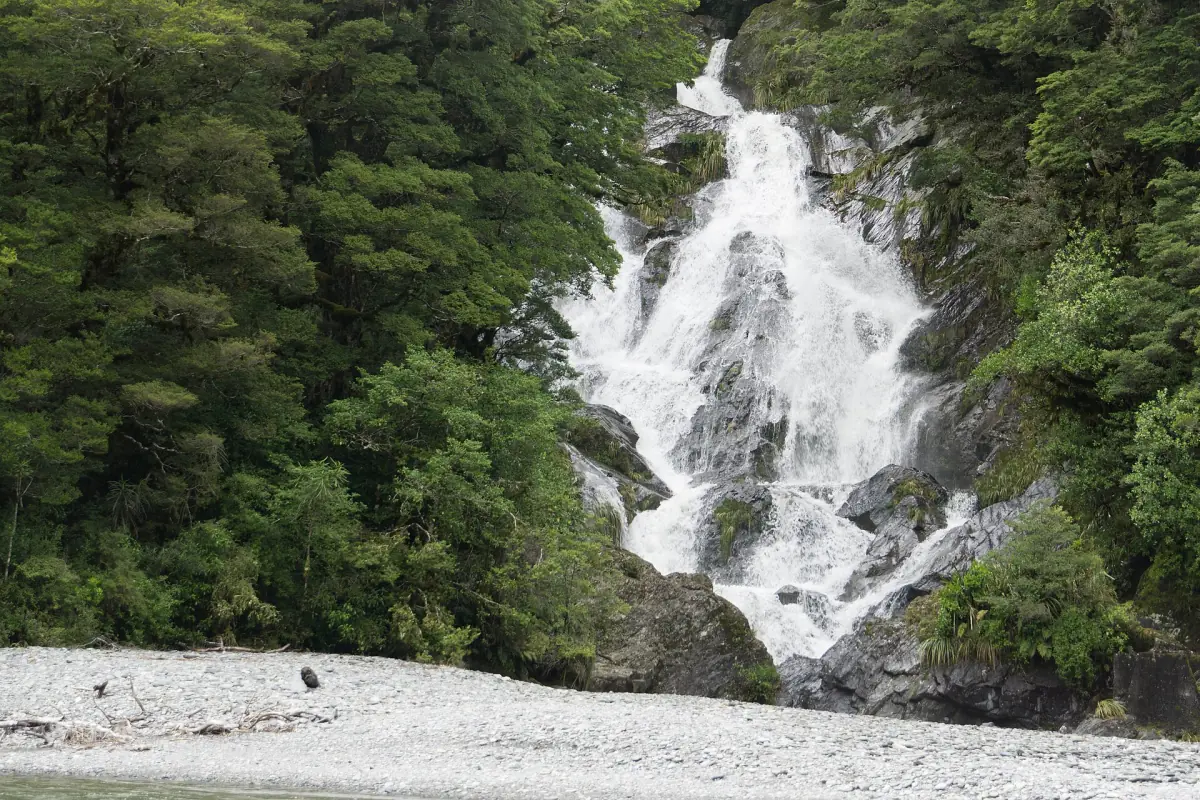
About 4,500 mm falls at the Haast Pass. The Fantail Falls, Thunder Creek Falls and Roaring Billy Falls are on the Haast side of the pass. See the Haast Pass guide for the stops.
Lake Wānaka
The head of Lake Wānaka gets about 2,000 mm, far less than the pass. The Wānaka Airport figure in the table is lower again.
Tours around the Blue Pools
Guided walks, scenic flights and jet boat rides from Wānaka and Makarora, with live prices and availability.
What rain changes
Practical effects on a normal Blue Pools day.
The color of the water
DOC says the blue of the pools depends on rain, so the color changes with the weather. If the color matters to you, look at the recent rain before you go. See the Blue Pools Track guide for the walk itself.
Flooded rivers
Do not cross a flooded river. DOC gives that advice for the Wills Valley, and says to turn back or wait if you are unsure. Fords on the Rob Roy road can be impassable even for four-wheel drives after heavy rain.
Washouts
DOC warns that the Davis Flat car park can wash out in heavy rain. If rain is forecast, do not leave a car there overnight.
The road
In late August 2026, heavy rain caused slips and SH6 closed between Makarora and Lake Hāwea. Access then ran in convoys for some days. On 9 October 2026 NZTA announced continuous travel again, with roadworks delays continuing on parts of the highway. Check the current state with NZTA before you drive.
Seasons for the Blue Pools and nearby walks
No single month suits every plan. These points come from DOC track information.
- November to April: DOC describes this as the main season for the Blue Pools Track and warns that sandflies can be strong. Bring repellent.
- May to November: avalanche paths are active on the Wills Valley route. On the Rob Roy Track, DOC advises turning around at the lower viewpoint in these months. Missing snow on the trail does not rule out avalanches from above.
- Roys Peak: closed every year from 1 October to 10 November for lambing. It reopens on 11 November. The route has no water and no shade, and the upper part can be icy in winter and spring.
- Every walk: pack a rain jacket for any walk in the corridor, even in a dry spell.
For lodging near the right stretch of road, see where to stay. Driving on to the glaciers? The sister guide covers Franz Josef weather on the West Coast.
Plan the rest of your trip
Weather decides the order of your days.
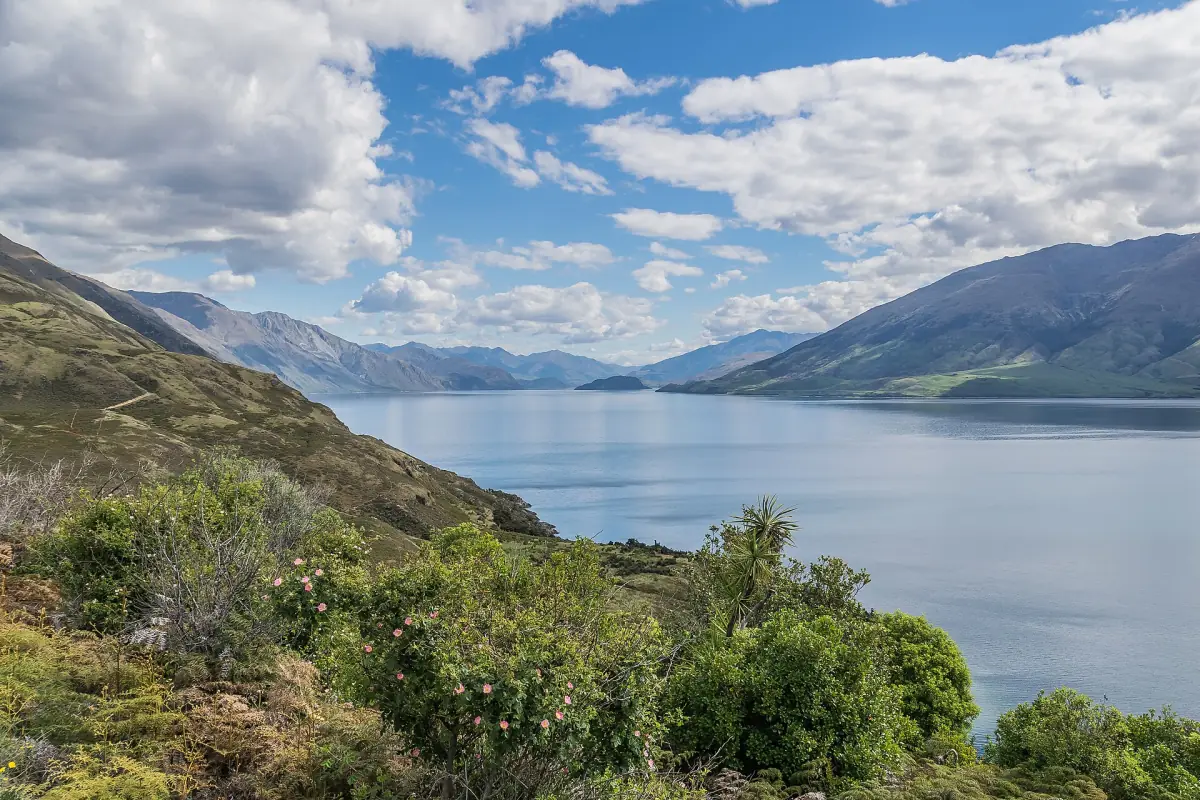
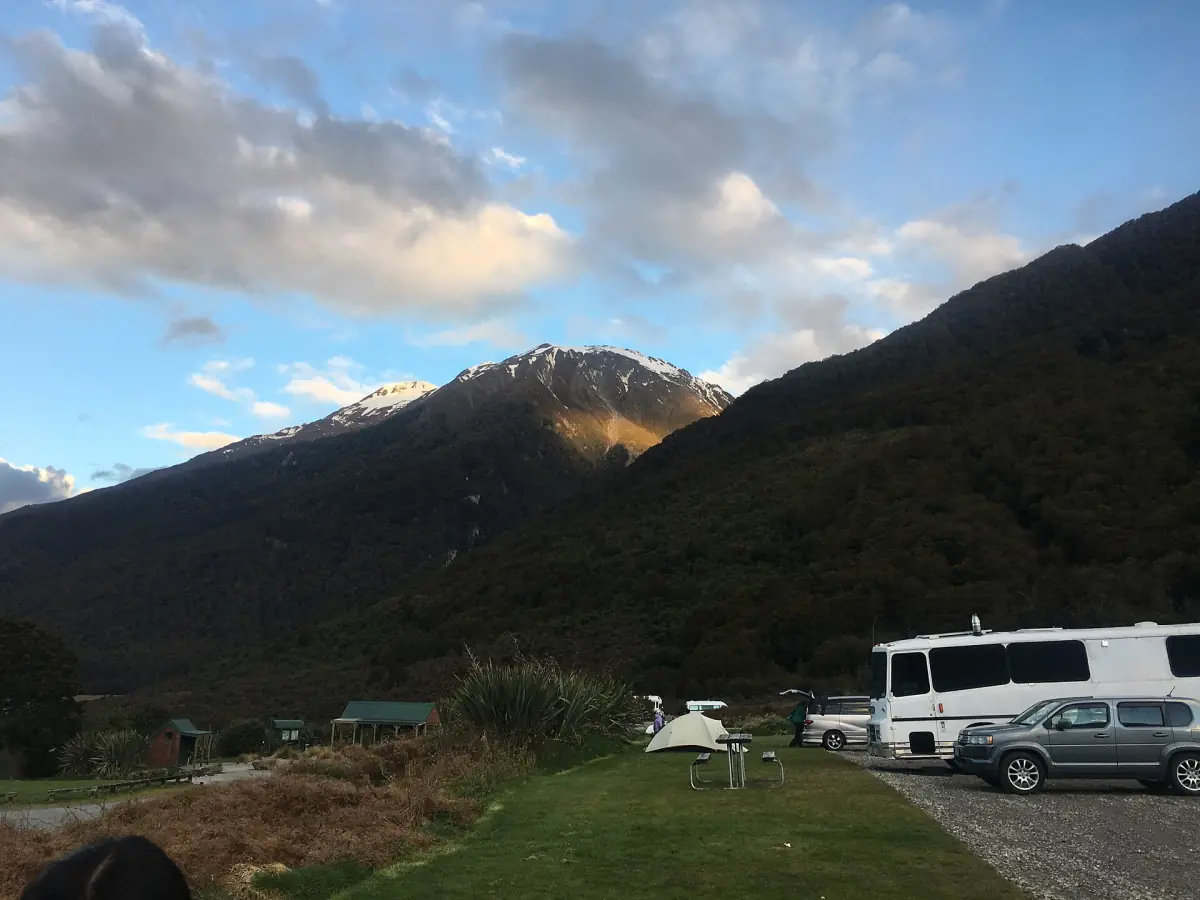
Weather and conditions: frequently asked questions
Is the weather at the Blue Pools the same as in Wānaka?
No. Makarora gets about 2,447 mm of rain a year and Wānaka Airport about 594 mm in the NIWA averages. Check a forecast for Makarora or the Haast Pass, not only for Wānaka.
Which month is driest?
In the 1981 to 2010 averages, February is the driest month at both Wānaka Airport (35 mm) and Makarora (134 mm). These are long-term values and do not predict a given year.
Which month is wettest?
December, with 66 mm at Wānaka Airport and 251 mm at Makarora in the same averages. October and September are also wet at Makarora.
When is the best time to visit the Blue Pools?
DOC lists November to April as the main season for the track. Rain can fall in any month, so pick a day with a dry forecast and check the road. If the color matters to you, check the rain of the last few days.
Can the Haast Pass road close?
Yes. SH6 closed between Makarora and Lake Hāwea in late August 2026 after heavy rain, and convoys ran for some days before continuous travel resumed on 9 October 2026. Check NZTA for the current state before you go.